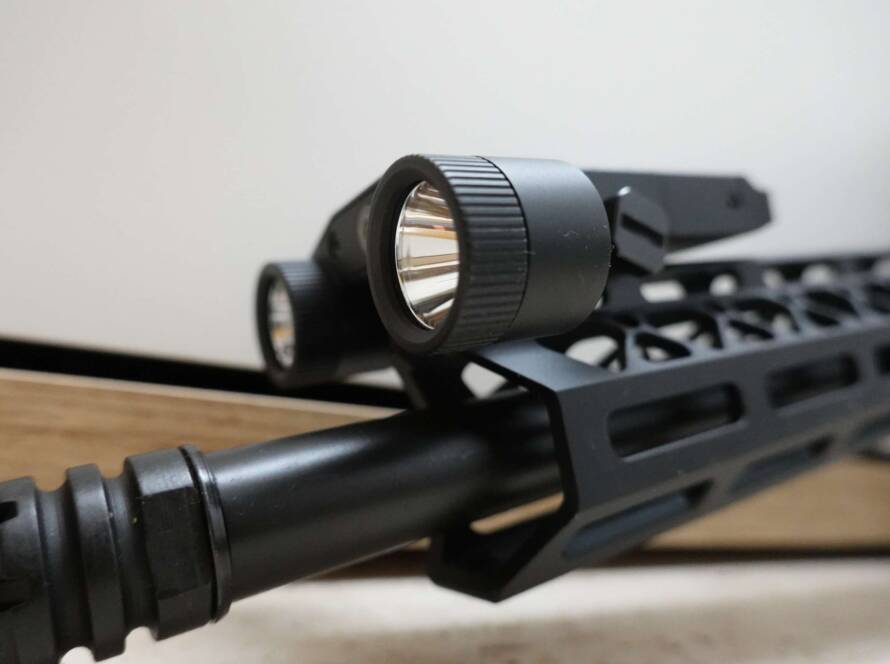


Eurosatory 2026: Where the Future of Defence Took Shape
Every two years, Eurosatory transforms Paris into the global meeting point for the defence and security industry. More than just another military exhibition, it has become one of the world’s most influential platforms for showcasing emerging technologies, strengthening international partnerships and defining the future of modern warfare.
Held from 15–19 June 2026 at the Paris Nord Villepinte Exhibition Centre, this year’s exhibition was larger and more international than ever before. According to the organisers, Eurosatory 2026 welcomed more than 2,600 exhibitors from 68 countries, hosted over 350 official delegations representing more than 100 nations, featured 40 national pavilions, 17 institutional pavilions, and covered an impressive 185,000 square metres of exhibition space. More than 140 conferences and 300 international speakers complemented the exhibition by discussing the rapidly changing security landscape and the technologies shaping tomorrow’s battlefields.
As a contributing author for FAGT.blog, I attended Eurosatory 2026 together with Michael Paa, founder of FAGT.blog, as accredited members of the international trade press. Over several days, we explored the exhibition halls, visited the extensive outdoor displays, spoke with manufacturers and documented many of the technologies that are likely to influence military operations for years to come.
Unlike many exhibition reports that simply present a collection of new products, this review focuses on the broader trends that became visible throughout the event. While numerous impressive vehicles, weapons and systems were unveiled, the most important story of Eurosatory 2026 was not any individual platform—it was the way modern defence technologies are becoming increasingly connected.
Artificial intelligence, autonomous systems, drones, counter-UAS capabilities and digital battlefield integration were no longer presented as standalone innovations. Instead, they appeared throughout the exhibition as interconnected components of a much larger operational ecosystem.
That evolution could be observed across every domain.
Land forces are becoming increasingly networked.
Air defence systems are integrating artificial intelligence and automated target recognition.
Ground robots are taking over dangerous logistics and reconnaissance tasks.
Naval forces are investing in autonomous underwater systems.
Even traditional heavy armoured vehicles are evolving into digital platforms capable of communicating with drones, command centres and neighbouring combat units in real time.
One of the greatest strengths of Eurosatory has always been its ability to present this complete picture.
Unlike many specialised defence exhibitions that focus on individual technologies, Eurosatory demonstrates how military capability is built by integrating multiple systems into one coherent operational architecture. Visitors can move from autonomous underwater vehicles to next-generation infantry weapons, from counter-drone systems to main battle tanks, all within a single exhibition.
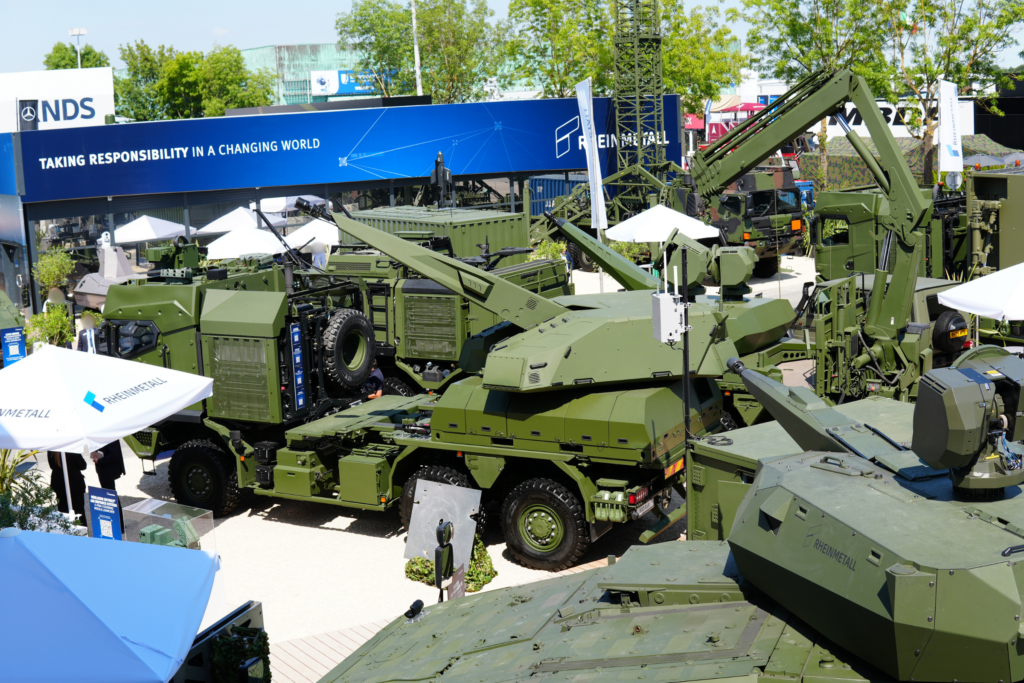
Walking through the outdoor exhibition area, it quickly became clear that Europe is investing heavily in integrated air defence. Several manufacturers showcased highly mobile systems designed to counter today’s rapidly evolving aerial threats, ranging from helicopters and cruise missiles to the growing number of unmanned aerial systems appearing on modern battlefields.
This shift reflects the lessons learned from recent conflicts.
Modern armed forces are no longer preparing for a battlefield dominated by one specific threat. Instead, they must be capable of responding simultaneously to conventional armoured warfare, drone attacks, electronic warfare, long-range precision strikes and highly dynamic multi-domain operations.
As a result, modern defence systems are becoming increasingly interconnected.
Rather than purchasing individual vehicles or weapon systems, armed forces are investing in complete operational ecosystems where sensors, command systems, communications, effectors and autonomous platforms work together as one integrated capability.
That overarching trend became the defining impression of Eurosatory 2026.
Over the following sections, we take a closer look at the technologies that stood out most—from artificial intelligence and autonomous robotics to drones, counter-UAS systems, heavy armoured vehicles and the remarkable strength of Europe’s rapidly evolving defence industry.
Artificial Intelligence Is No Longer a Vision of the Future
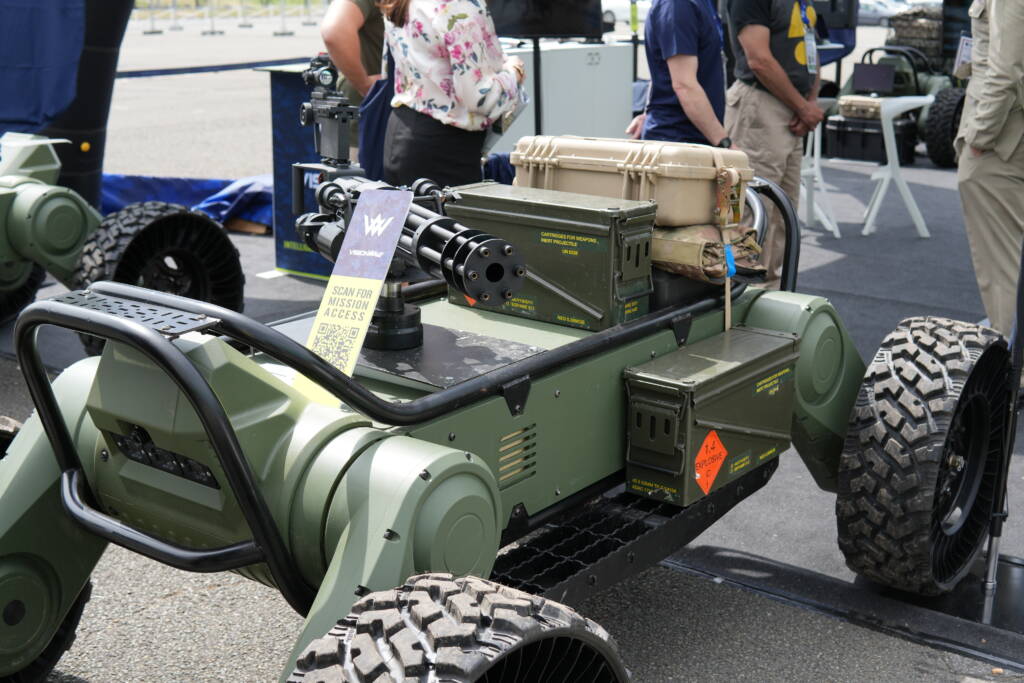
If one technology defined Eurosatory 2026 more than any other, it was artificial intelligence.
Unlike previous editions, where AI was often presented as a future capability, this year’s exhibition demonstrated that artificial intelligence has become an operational technology already integrated into modern defence systems.
Across dozens of exhibition stands, AI appeared in command-and-control software, sensor fusion, autonomous navigation, battlefield management, target recognition and decision-support platforms. Rather than replacing military personnel, these systems are designed to accelerate information processing and improve situational awareness while keeping the human operator firmly in control.
This reflects a fundamental shift in modern warfare.
Today’s armed forces collect enormous amounts of information from drones, satellites, reconnaissance units, radar installations, electronic warfare sensors and ground surveillance systems. Processing this data manually has become increasingly difficult. Artificial intelligence now serves as an operational tool capable of filtering information, identifying potential threats and supporting faster, more informed decision-making.
One aspect became particularly noticeable throughout the exhibition.
Artificial intelligence was rarely marketed as a standalone product. Instead, it had become an invisible layer integrated into countless military systems. Whether visitors examined armoured vehicles, command posts, air-defence systems or autonomous platforms, AI was quietly working in the background to improve operational effectiveness.
Autonomous Systems Expand Across Every Domain
Closely connected to the rise of artificial intelligence was another unmistakable trend: autonomy.
Only a few years ago, autonomous systems were often regarded as experimental technologies. At Eurosatory 2026, they had clearly matured into practical military capabilities.
Autonomous ground vehicles, unmanned surface vessels, underwater drones and aerial systems were presented throughout the exhibition, demonstrating that robotics is becoming an increasingly important component of military operations.
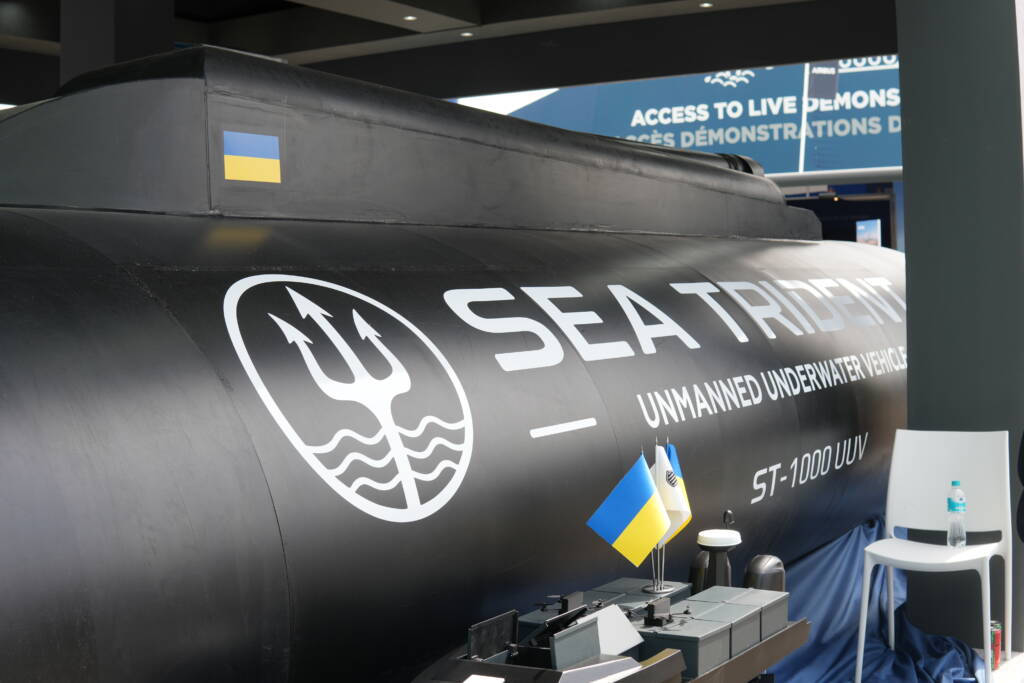
One particularly interesting exhibit was the SeaTrident unmanned underwater vehicle, illustrating how autonomy is expanding beyond land and air into the maritime domain.
These underwater platforms are designed for missions such as:
- Harbour protection
- Underwater reconnaissance
- Infrastructure inspection
- Mine countermeasure support
- Coastal surveillance
- Maritime intelligence gathering
As underwater infrastructure becomes increasingly important—from communication cables to offshore energy installations—the demand for autonomous underwater systems is expected to grow significantly over the coming years.
The same trend could be observed on land.
Robotic platforms capable of transporting supplies, evacuating casualties, conducting reconnaissance missions or supporting explosive ordnance disposal are rapidly moving from prototype status into operational service.
Rather than replacing soldiers, these systems are intended to reduce human exposure during the most dangerous phases of military operations while extending operational reach.
The Drone Revolution Has Fully Arrived
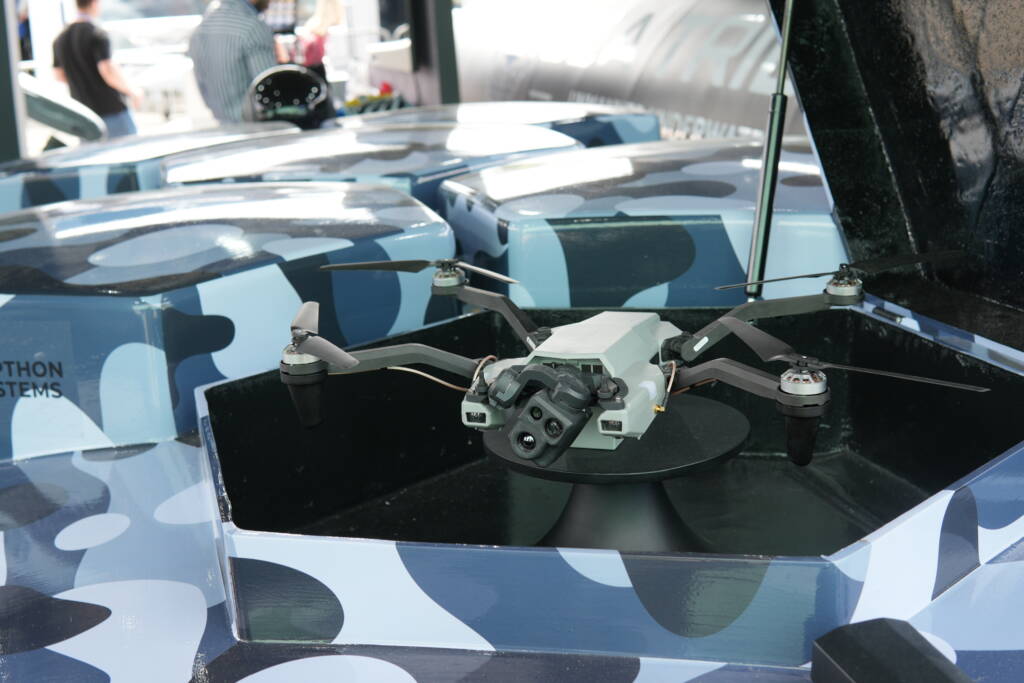
If artificial intelligence represented the invisible technological revolution at Eurosatory 2026, drones represented the most visible one.
Unmanned aerial systems appeared almost everywhere.
Small reconnaissance drones.
FPV attack drones.
Loitering munitions.
Large fixed-wing surveillance aircraft.
Vertical take-off reconnaissance systems.
Maritime drones.
Even heavy military vehicles increasingly featured integrated drone capabilities.
Compared to previous editions of the exhibition, the role of drones has changed dramatically.
Instead of being presented as specialised reconnaissance assets, unmanned systems have become integral components of almost every operational domain.
They support intelligence gathering.
Target acquisition.
Battle damage assessment.
Electronic warfare.
Precision strikes.
Logistics.
Communications.
Force protection.
Modern military operations are increasingly built around the continuous exchange of information between drones, vehicles, command posts and individual soldiers.
The battlefield has become significantly more transparent—and significantly more dangerous.
Eurosatory 2026 reflected this reality with remarkable clarity.
Vertical Take-Off UAVs Continue to Gain Importance
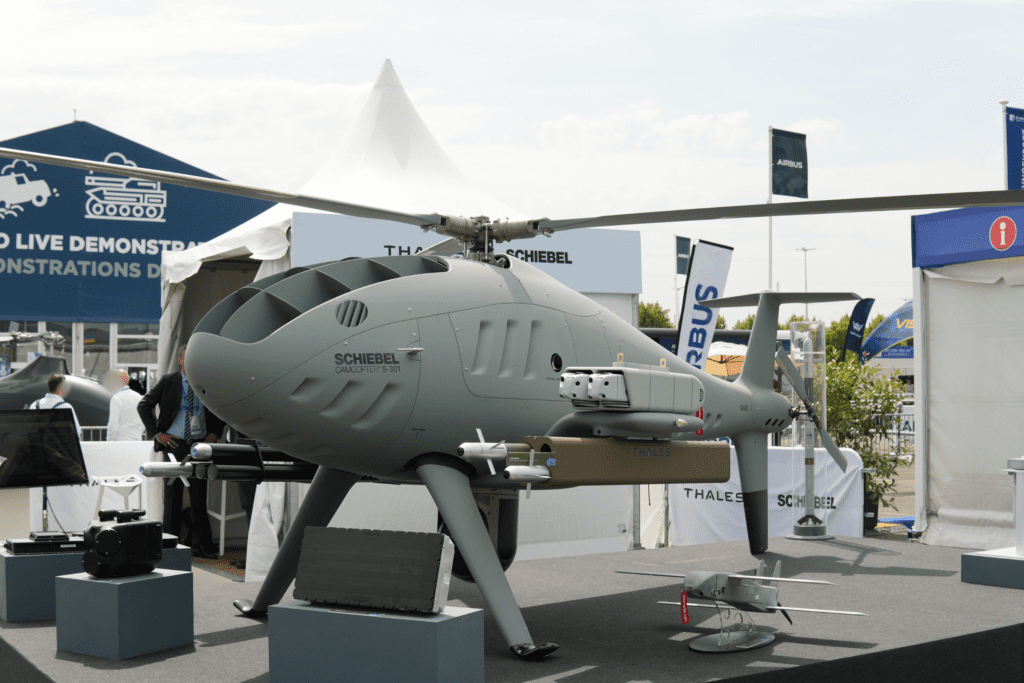
Among the numerous aerial platforms displayed during the exhibition, the Schiebel CAMCOPTER® S-100 remained one of the most recognisable examples of mature VTOL drone technology.
Unlike conventional fixed-wing UAVs, vertical take-off and landing aircraft require no runway infrastructure, allowing them to operate from naval vessels, confined urban environments and remote forward operating bases.
The CAMCOPTER has already proven itself in military, border security and maritime surveillance missions around the world.
Its continued presence at Eurosatory demonstrates how vertical take-off platforms have become an established capability rather than an emerging technology.
Equipped with modular sensor packages, these systems can perform Intelligence, Surveillance and Reconnaissance (ISR), maritime patrol, target acquisition and border monitoring while remaining highly flexible in deployment.
As military operations become increasingly expeditionary and distributed, this operational flexibility will only become more valuable.
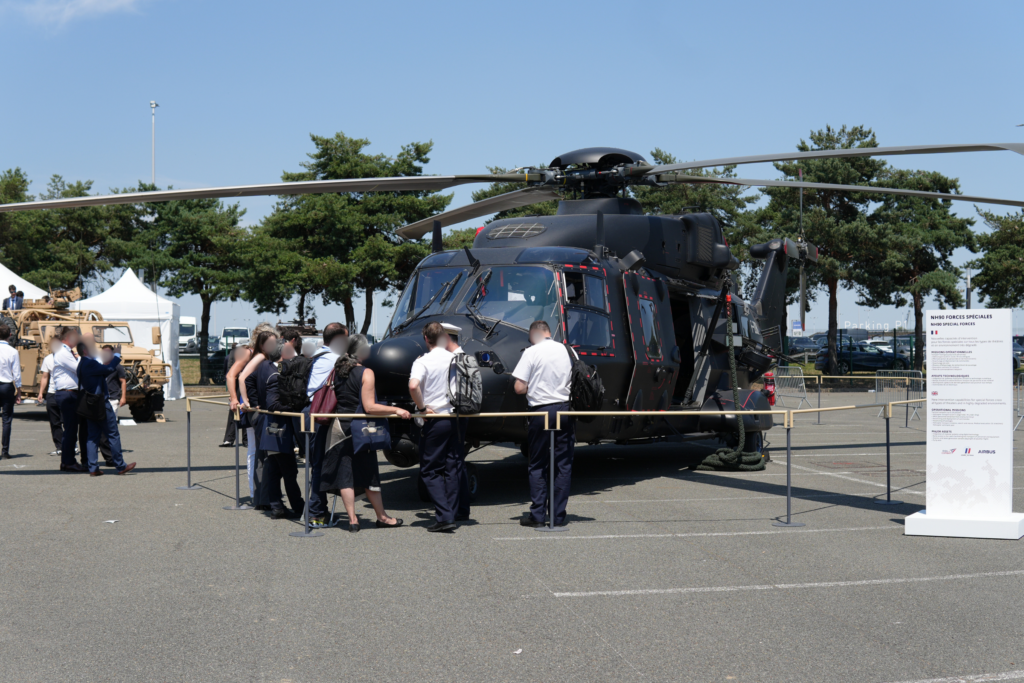
By the end of the first exhibition halls, one conclusion had already become unavoidable.
Artificial intelligence and autonomous systems are no longer experimental additions to military operations.
They have become essential enablers that influence reconnaissance, logistics, mobility, decision-making and combat effectiveness across every operational domain.
The next major trend became equally impossible to ignore: the rapid evolution of counter-drone technologies, mobile air defence and the continuing importance of highly protected land platforms operating within these increasingly connected battlefield environments.
Counter-UAS Has Become a Core Capability
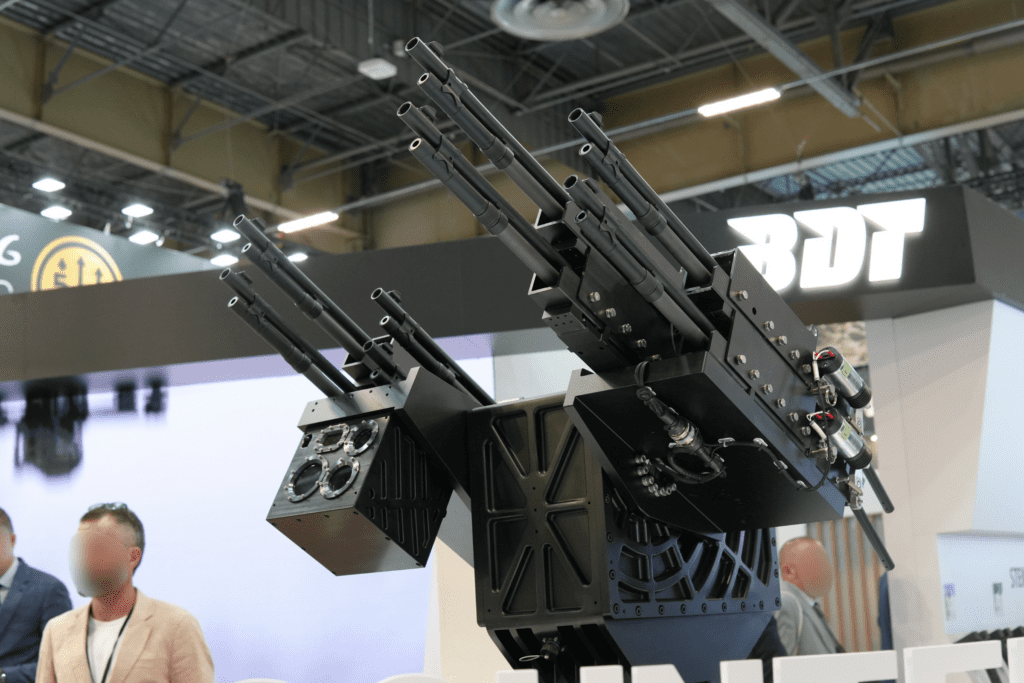
If drones represented one of the defining technologies of Eurosatory 2026, then counter-drone systems represented the industry’s immediate response to this rapidly evolving threat.
It quickly became apparent that nearly every major defence manufacturer is now investing heavily in Counter-Unmanned Aircraft Systems (Counter-UAS). What was once considered a niche capability has become an essential component of modern military operations.
The reason is straightforward.
Small unmanned aircraft have fundamentally changed the battlefield. They are inexpensive, widely available, difficult to detect and capable of conducting reconnaissance, artillery spotting or precision attacks with remarkable effectiveness. As a result, protecting troops, command posts and critical infrastructure against drone threats has become one of the highest priorities for armed forces worldwide.
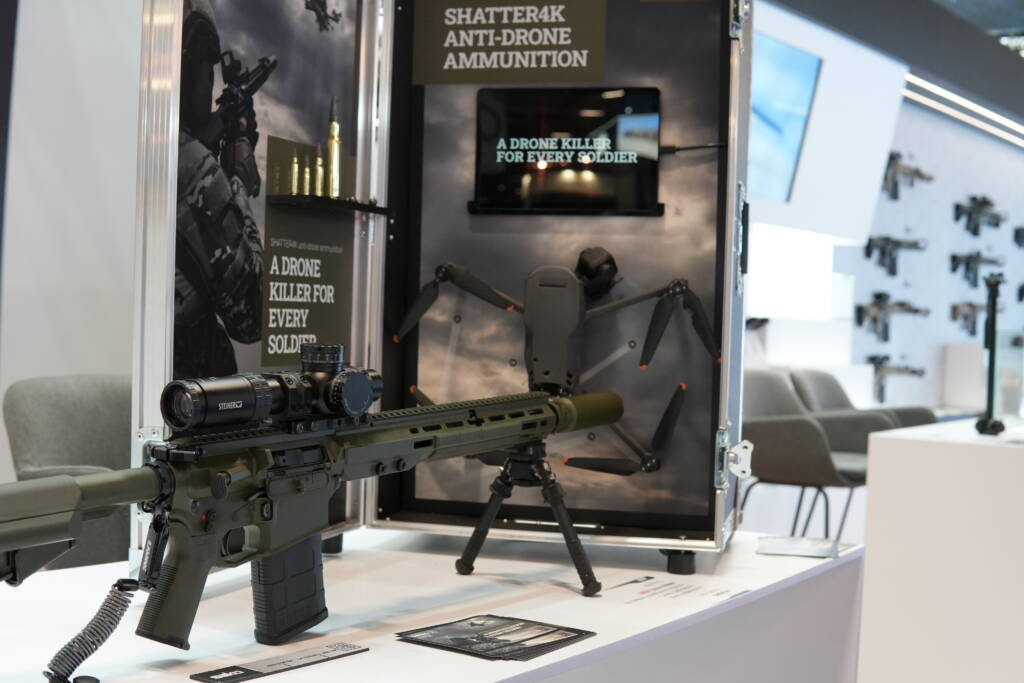
Manufacturers presented a wide variety of solutions ranging from radar systems and electro-optical sensors to electronic warfare equipment, RF detection, jamming technologies and kinetic interceptors.
However, one trend became especially obvious.
Counter-UAS is no longer viewed as a standalone capability.
Instead, it is increasingly integrated into larger battlefield management systems that combine multiple sensors and engagement options into a single operational picture.
Rather than simply shooting down drones, modern systems aim to detect threats as early as possible, identify them automatically and recommend the most effective response.
Artificial intelligence once again plays a central role in this process.
Mobile Air Defence Is Undergoing a Renaissance
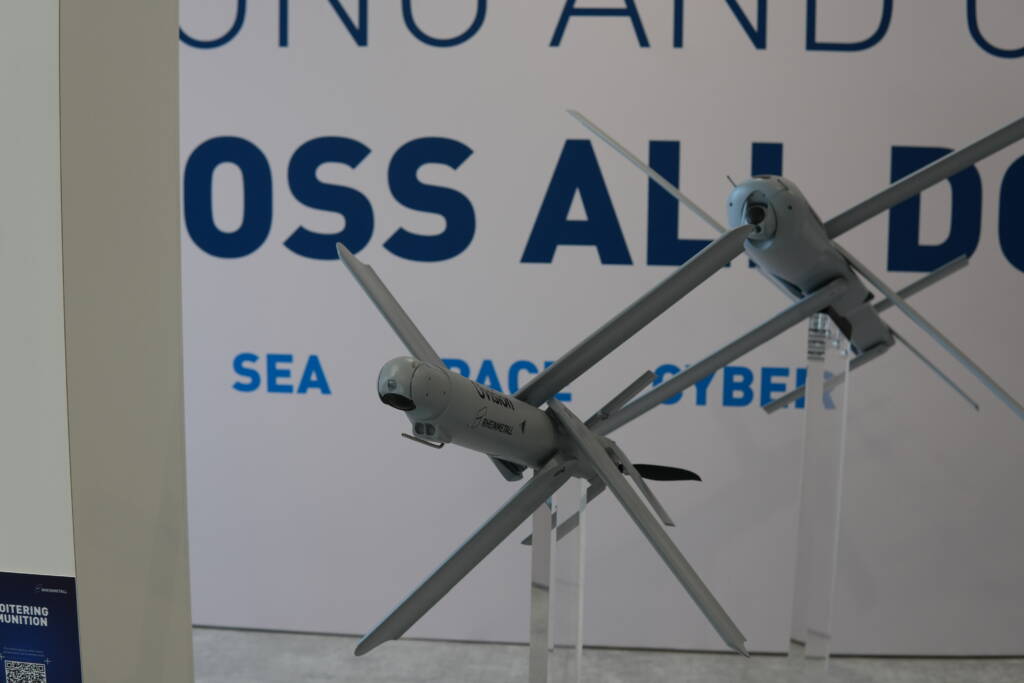
One of the most noticeable developments throughout the exhibition was the renewed importance of mobile air-defence systems.
For many years, military procurement focused primarily on expeditionary operations where large-scale aerial threats were comparatively limited.
Today’s operational environment looks very different.
Modern armed forces must simultaneously defend against:
- FPV drones
- Loitering munitions
- Tactical UAVs
- Cruise missiles
- Attack helicopters
- Low-flying aircraft
Consequently, short-range air defence has become one of the fastest-growing sectors within the defence industry.
Several manufacturers presented highly mobile solutions capable of accompanying mechanised formations while providing continuous protection against rapidly evolving aerial threats.
Rather than operating independently, these systems increasingly form part of layered air-defence architectures connected through digital command-and-control networks.
The objective is no longer simply to intercept incoming targets, but to create a comprehensive defensive ecosystem capable of detecting, identifying and engaging multiple threats simultaneously.
Automation Is Transforming Air Defence
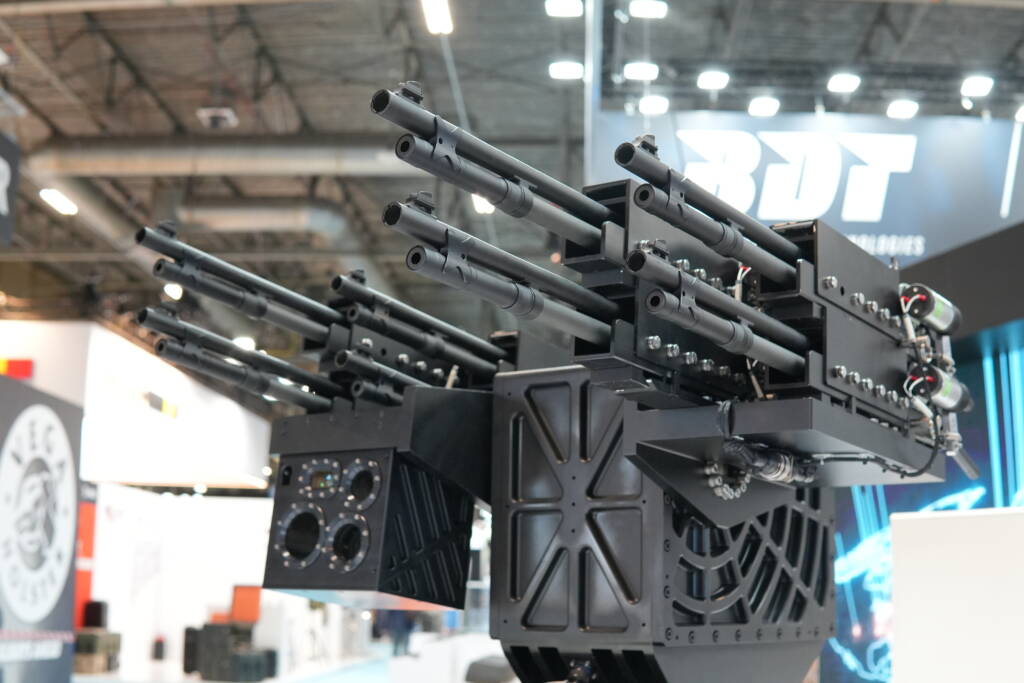
Another remarkable development was the increasing level of automation within modern air-defence systems.
Many manufacturers demonstrated how artificial intelligence can support operators by automatically classifying airborne objects, prioritising threats and assisting with engagement decisions.
This becomes particularly valuable when defending against drone swarms or multiple simultaneous attacks.
Rather than overwhelming operators with dozens of independent sensor feeds, AI-supported command systems can merge radar, electro-optical and electronic warfare data into one coherent operational picture.
Human operators remain responsible for engagement decisions, but automation significantly reduces reaction times while improving overall situational awareness.
This combination of artificial intelligence, advanced sensors and highly mobile weapon systems represents one of the most important technological developments currently shaping modern air defence.
Heavy Vehicles Continue to Define Land Warfare
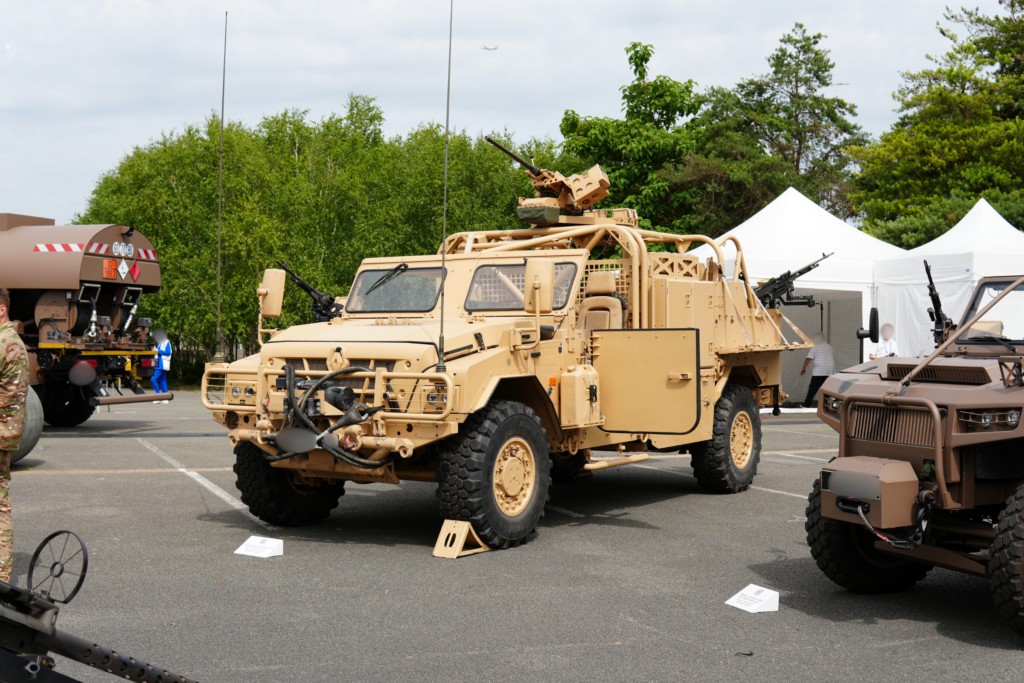
Despite the enormous attention surrounding artificial intelligence and unmanned systems, Eurosatory 2026 also reinforced another important reality.
Heavy armoured vehicles remain indispensable.
Walking through the extensive outdoor exhibition area, visitors encountered everything from protected patrol vehicles and infantry fighting vehicles to main battle tanks, engineering platforms and specialised support vehicles.
Compared with many smaller European defence exhibitions, the scale of heavy equipment on display was truly impressive.
What has changed, however, is not the importance of these platforms—but the technologies integrated into them.
Modern armoured vehicles increasingly combine:
- Active protection systems
- Digital battlefield management
- Advanced communications
- Drone integration
- Remote weapon stations
- AI-assisted situational awareness
Rather than functioning as isolated combat vehicles, they are becoming connected nodes within much larger operational networks.
The modern battlefield is evolving into a highly interconnected ecosystem where every platform continuously exchanges information with surrounding assets.
Mobility, Survivability and Adaptability
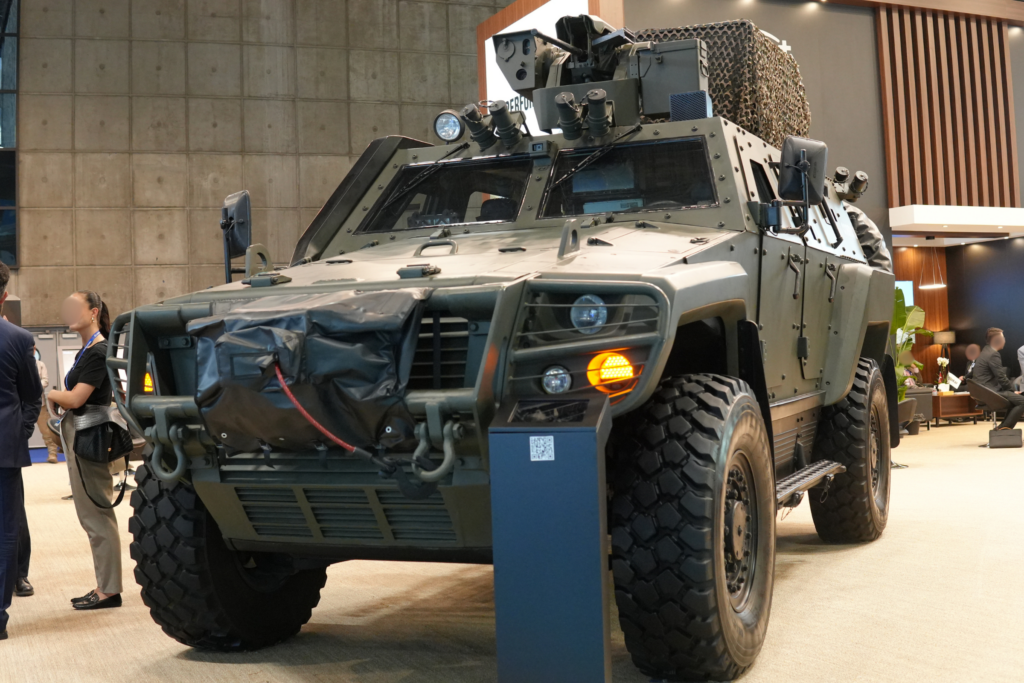
Alongside heavy combat platforms, numerous manufacturers showcased highly protected tactical vehicles designed for rapid deployment across a wide range of operational environments.
These platforms combine mobility, protection and flexibility while remaining significantly lighter than traditional infantry fighting vehicles.
Modern patrol vehicles are increasingly expected to perform reconnaissance, convoy protection, border security, special operations support and internal security missions—all within a single modular platform.
Many exhibited vehicles featured configurable armour packages, communication suites and mission-specific equipment, allowing operators to adapt them quickly to changing operational requirements.
This emphasis on modularity reflects another recurring theme observed throughout Eurosatory 2026.
Future military systems are no longer designed for a single mission profile.
Instead, flexibility has become a defining characteristic across almost every category of defence technology.
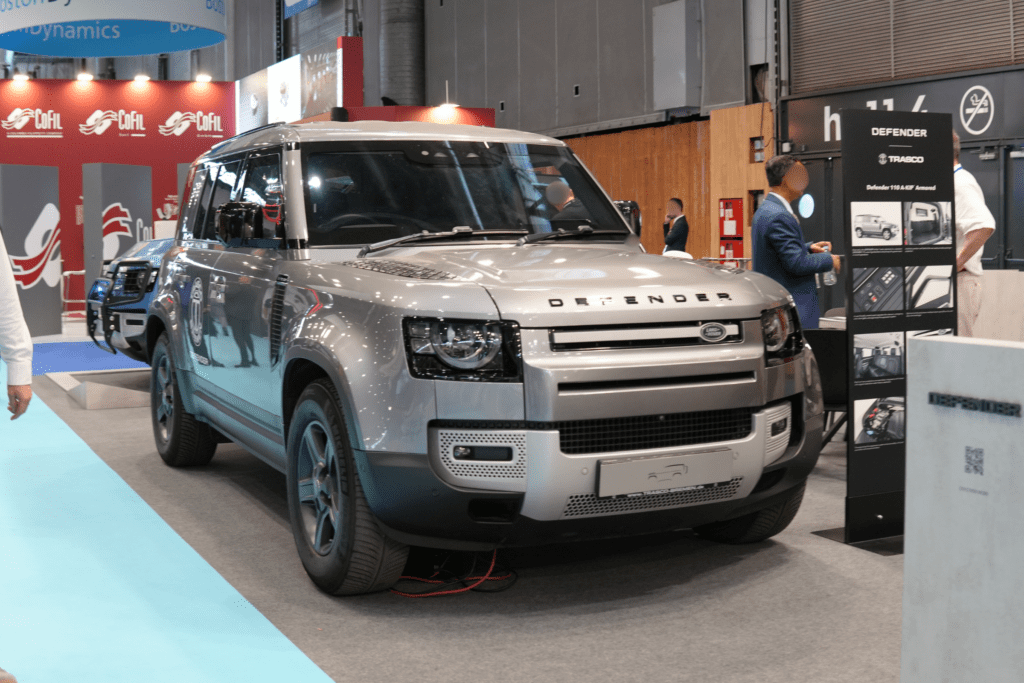
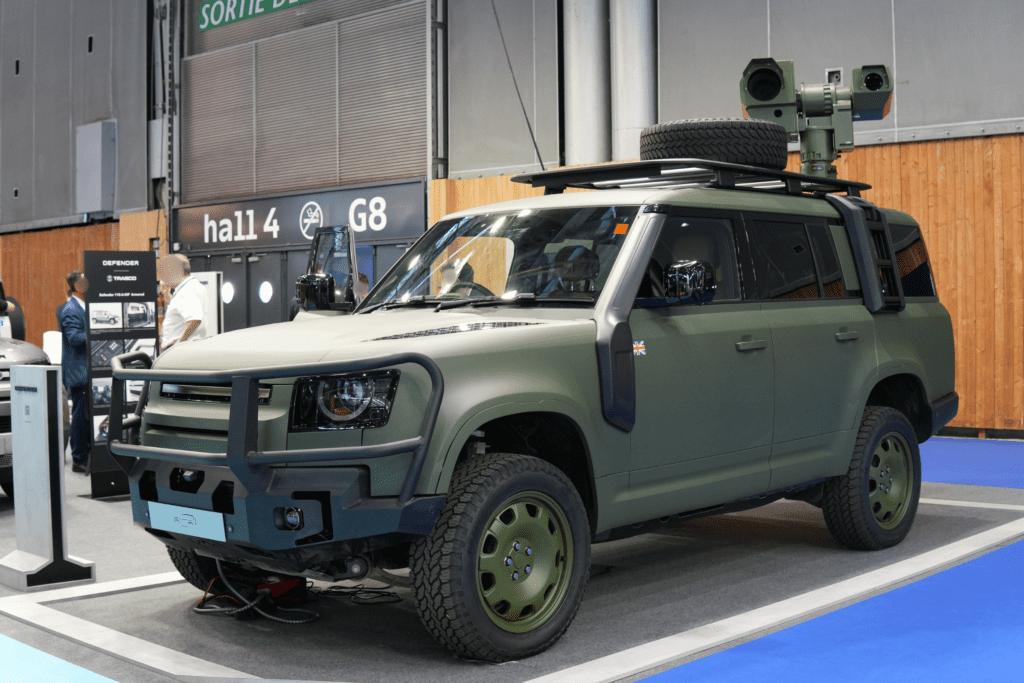
One particularly interesting example was the armoured Land Rover Defender displayed by Trasco. Based on the well-known Defender platform, the vehicle has been transformed into a protected mobility solution for government agencies, diplomatic services, law enforcement and special operations units.
Rather than focusing solely on battlefield applications, vehicles like this demonstrate how military-grade protection is increasingly finding its way into homeland security and high-risk transport missions. The Defender highlighted the growing overlap between defence and internal security, illustrating how manufacturers are adapting proven commercial platforms for demanding operational environments while maintaining excellent mobility and everyday usability.
European Defence Industry Demonstrates Strong Momentum
One of my strongest personal impressions from Eurosatory 2026 was the remarkable momentum currently visible across Europe’s defence industry.
Companies such as Rheinmetall, KNDS, Leonardo and numerous other European manufacturers demonstrated an impressive portfolio of mature and highly integrated defence technologies.
Walking through the exhibition, it became increasingly clear that European industry is no longer focusing solely on developing individual platforms.
Instead, manufacturers are delivering complete operational solutions that combine mobility, protection, communications, artificial intelligence, autonomous systems and digital command capabilities into integrated military ecosystems.
Although companies from North America, Asia and the Middle East were also well represented, Europe’s contribution stood out through both its technological maturity and the breadth of capabilities on display.
From highly mobile air-defence systems to advanced infantry fighting vehicles and next-generation autonomous platforms, the exhibition reflected a defence industry responding rapidly to today’s evolving security environment.
Rather than simply reacting to changing threats, European manufacturers appear to be actively shaping the future of modern military capability.
Modern Land Systems Continue to Evolve
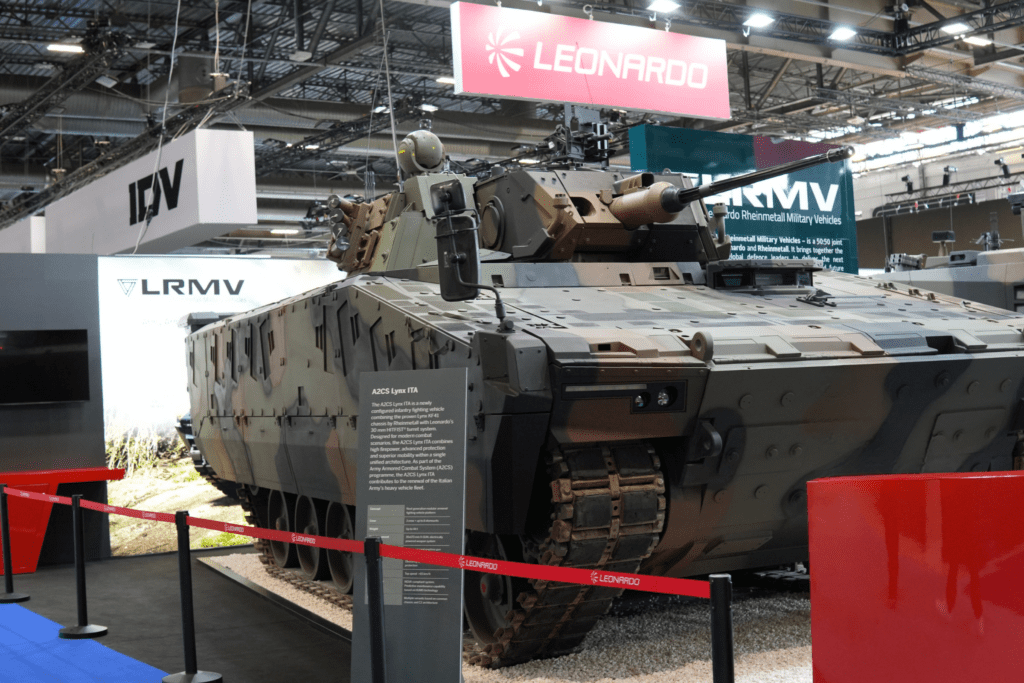
Although drones and artificial intelligence dominated many headlines, Eurosatory 2026 also demonstrated that conventional land systems remain at the core of military capability.
Rather than becoming obsolete, infantry fighting vehicles and armoured combat platforms are evolving into highly connected digital systems.
One excellent example is the Lynx Infantry Fighting Vehicle, which has become one of Europe’s most modern tracked combat platforms. Designed with a modular architecture, the vehicle can be adapted for different operational requirements while integrating advanced battlefield management systems, active protection technologies and unmanned capabilities.
What makes platforms like the Lynx particularly interesting is not only their firepower or protection level, but their ability to operate as part of a much larger combat network.
Modern IFVs are increasingly expected to communicate with reconnaissance drones, headquarters, neighbouring vehicles and supporting weapon systems in real time.
This ability to exchange information quickly is becoming just as important as armour thickness or weapon calibre.
Main Battle Tanks Are Far From Obsolete
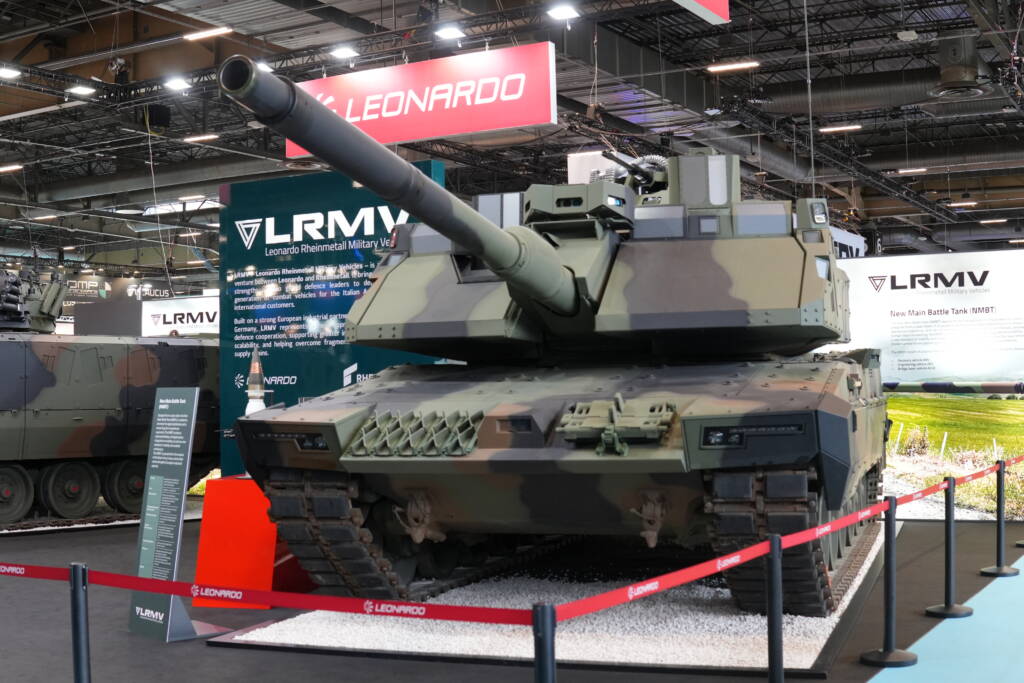
One recurring misconception in recent public discussions is that drones have made main battle tanks obsolete.
Eurosatory 2026 painted a very different picture.
Rather than disappearing from the battlefield, tanks are undergoing a profound technological transformation.
Modern platforms are now equipped with:
- Active Protection Systems (APS)
- Digital battlefield management
- Advanced thermal imaging
- AI-assisted situational awareness
- Improved sensor integration
- Drone connectivity
- Enhanced communications
These technologies allow heavy armour to operate as part of a fully networked force instead of fighting independently.
Recent conflicts have shown that tanks remain essential for breakthrough operations, urban combat and supporting mechanised infantry.
The challenge is no longer the platform itself.
The challenge is ensuring that tanks operate within a protected ecosystem supported by reconnaissance drones, electronic warfare, air defence and digital command networks.
This integrated approach was clearly visible throughout the exhibition.
The Modern Soldier Remains at the Centre of Every Battlefield
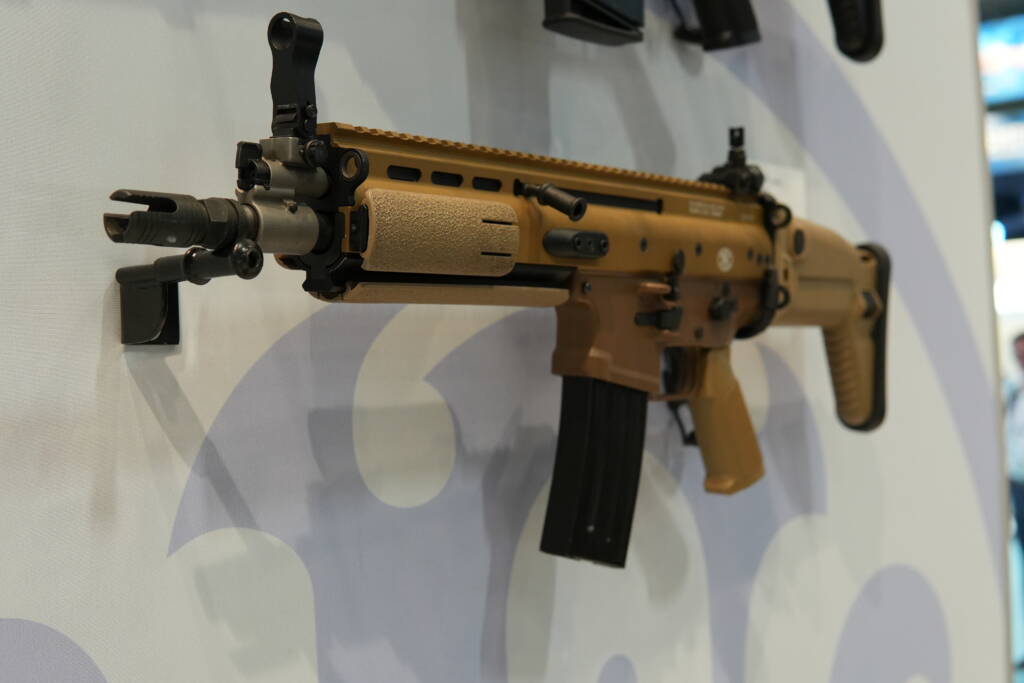
Despite the rapid growth of autonomous technologies, one fact remains unchanged:
Modern warfare is ultimately conducted by soldiers.
Manufacturers therefore continue to invest heavily in improving the equipment carried by individual infantry personnel.
Throughout the exhibition, companies presented modular assault rifles, suppressors, optics, thermal devices, laser aiming modules and ergonomic accessories designed to improve both survivability and combat effectiveness.
The FN SCAR remains one of the most recognised modular rifle platforms currently used by military and special operations forces worldwide.
Its continued presence at major international defence exhibitions illustrates the industry’s focus on flexibility rather than one-size-fits-all weapon systems.
Today’s infantry weapons are increasingly designed as modular platforms capable of being configured for vastly different operational environments.
Modularity Is Becoming the New Standard
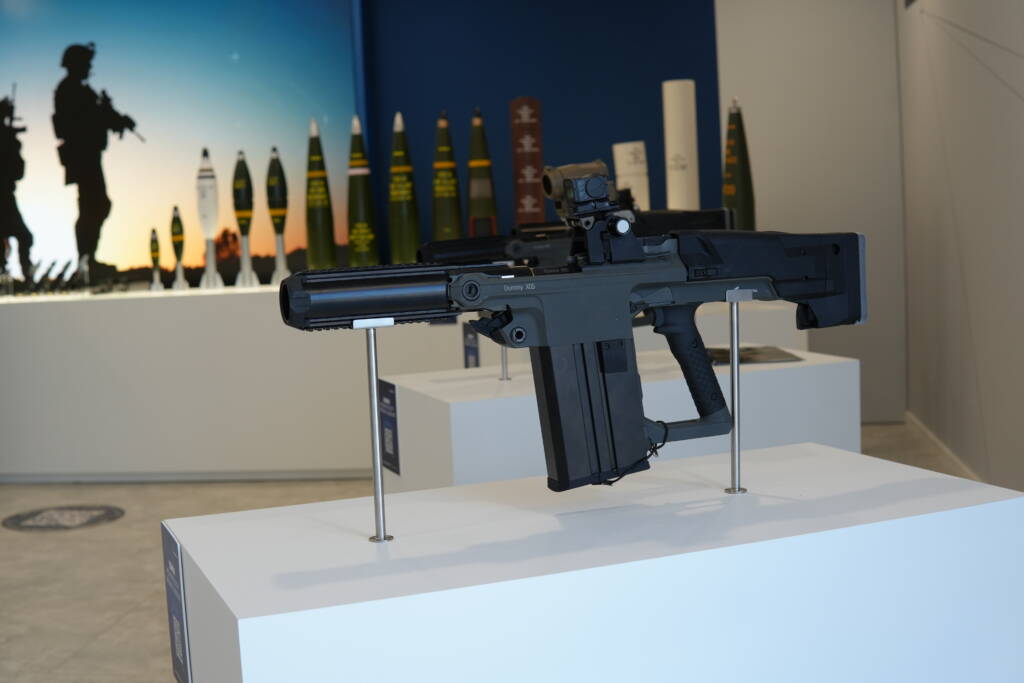
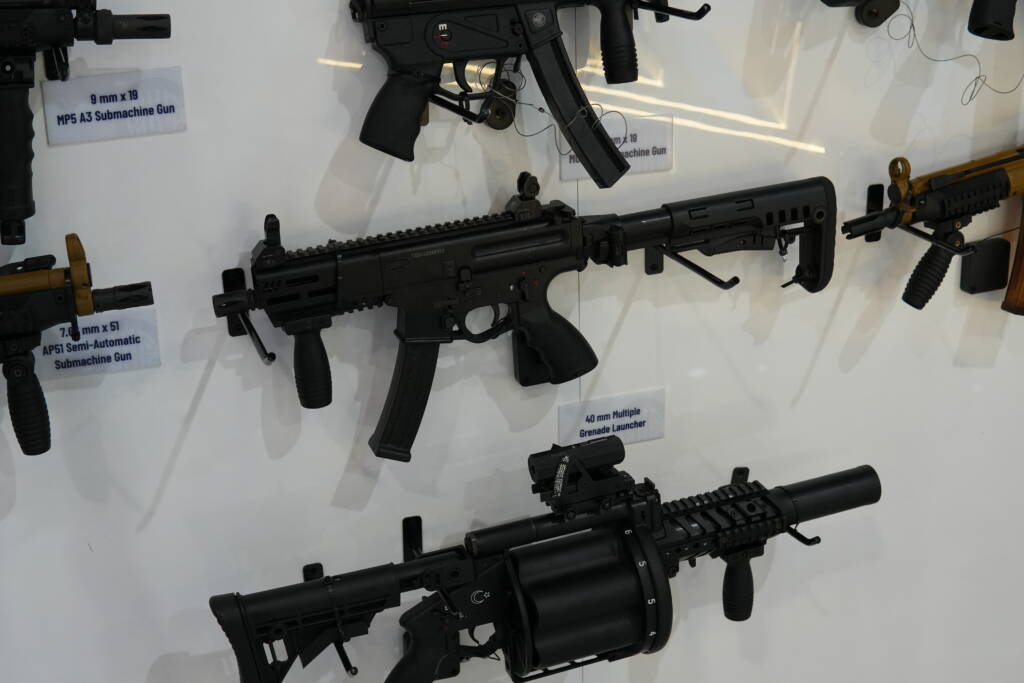
The same philosophy could be observed throughout virtually every infantry-related exhibit.
Whether examining grenade launchers, assault rifles, optics or accessories, manufacturers consistently emphasised modularity and mission adaptability.
Modern soldiers rarely deploy with fixed equipment configurations.
Instead, weapons are increasingly adapted to individual mission profiles using interchangeable accessories, suppressors, optics and electronic devices.
This trend mirrors developments seen across larger military platforms.
Vehicles are modular.
Robots are modular.
Air-defence systems are modular.
Even the equipment carried by individual soldiers now follows the same design philosophy.
The objective is clear: maximise flexibility while simplifying logistics and future upgrades.
Precision Engagement Still Matters
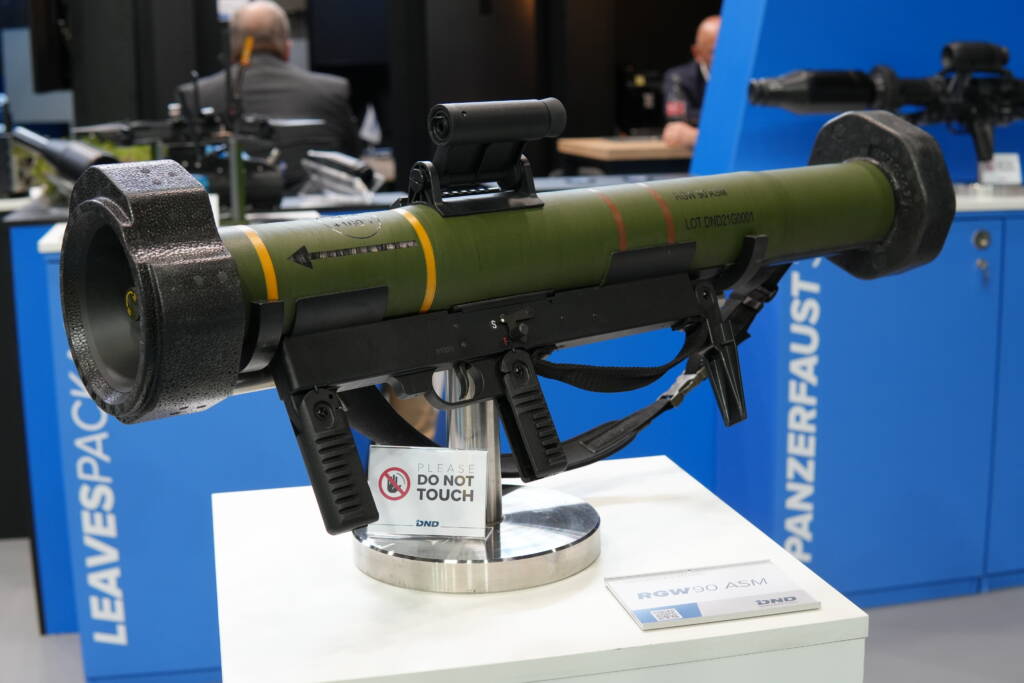
While drones continue to reshape modern warfare, precision-guided infantry weapons remain indispensable.
The RGW90 anti-tank weapon serves as a good example of how lightweight precision systems continue to provide infantry forces with highly effective anti-armour capabilities.
Portable weapon systems remain especially important during urban operations, rapid deployment missions and situations where heavier supporting assets are unavailable.
Rather than competing with drones, shoulder-fired precision weapons complement broader combined-arms tactics by offering immediate firepower against fortified positions, light armoured vehicles and other battlefield threats.
Eurosatory clearly demonstrated that future battlefields will require both unmanned technologies and highly capable infantry weapon systems working together.
Ammunition Technology Is Advancing Alongside Weapon Systems
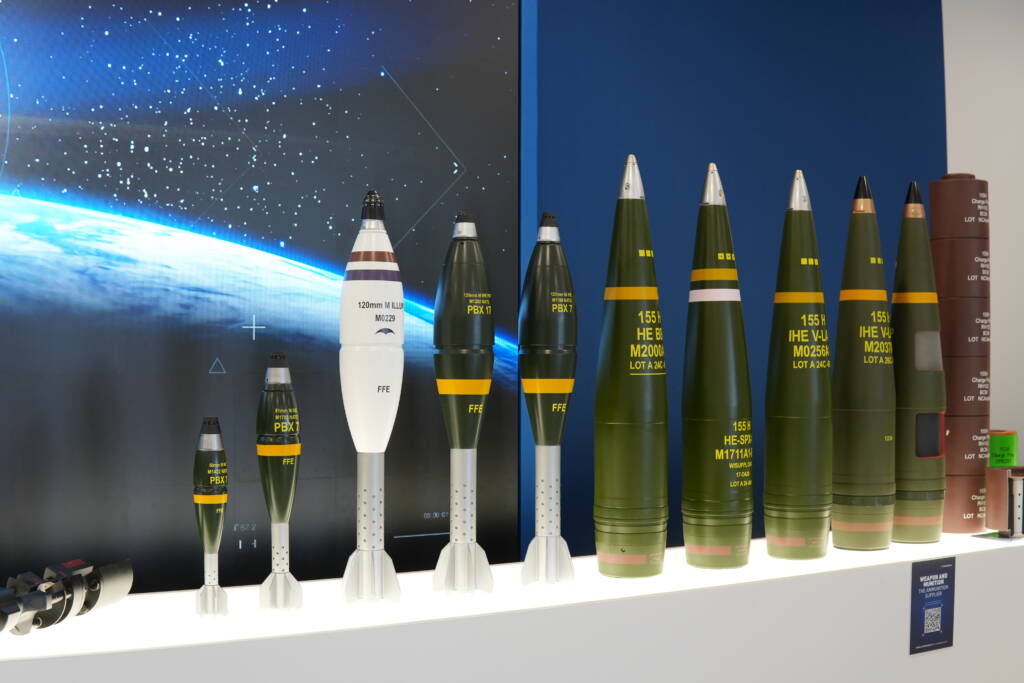
Weapon platforms often receive the majority of public attention.
However, ammunition technology continues to evolve just as rapidly.
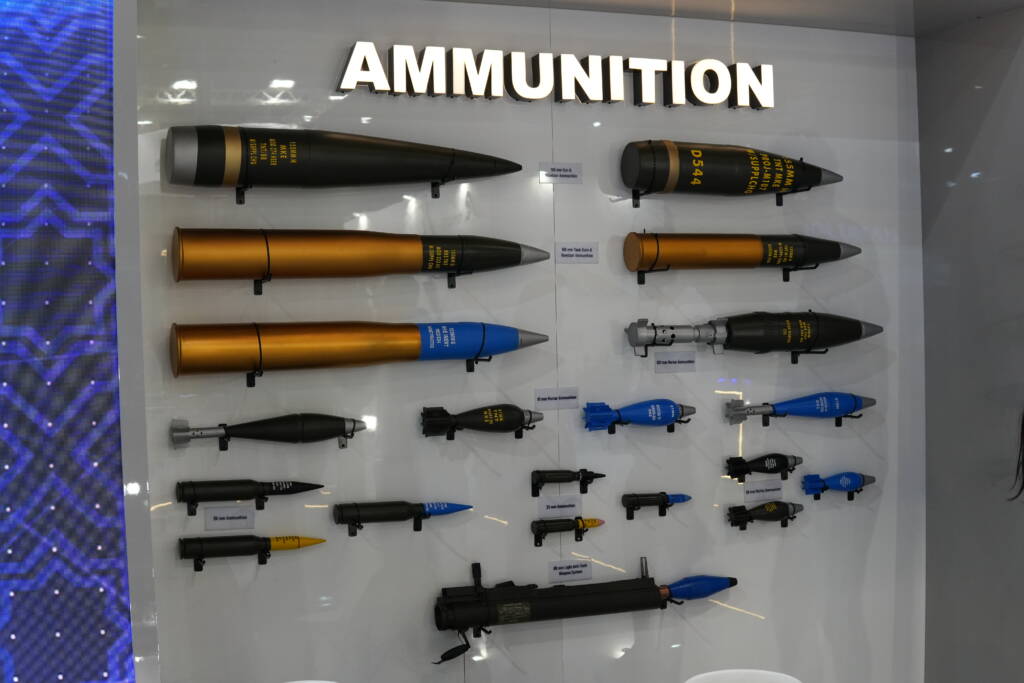
Eurosatory 2026 featured extensive displays covering artillery projectiles, mortar ammunition, programmable munitions and specialised effects developed for increasingly complex operational environments.
Manufacturers are focusing on:
- Greater precision
- Extended range
- Programmable fuzes
- Airburst capabilities
- Improved lethality
- Counter-drone applications
These developments demonstrate that innovation is no longer limited to launch platforms.
Ammunition itself has become an increasingly sophisticated component of modern military capability.
Industrial Capacity Is Becoming a Strategic Asset
One observation extended beyond the technologies themselves.
Recent geopolitical developments have fundamentally changed how governments think about defence production.
Military capability no longer depends solely on advanced equipment.
It also depends on the ability to manufacture sufficient quantities of vehicles, spare parts, missiles and ammunition over extended periods.
Several manufacturers therefore highlighted not only their latest products but also their industrial capacity, production scalability and international partnerships.
The large ammunition displays served as a powerful reminder that logistics, manufacturing resilience and industrial readiness remain fundamental pillars of national defence.
Technology alone cannot sustain military operations.
Production capacity matters just as much.
Final Thoughts
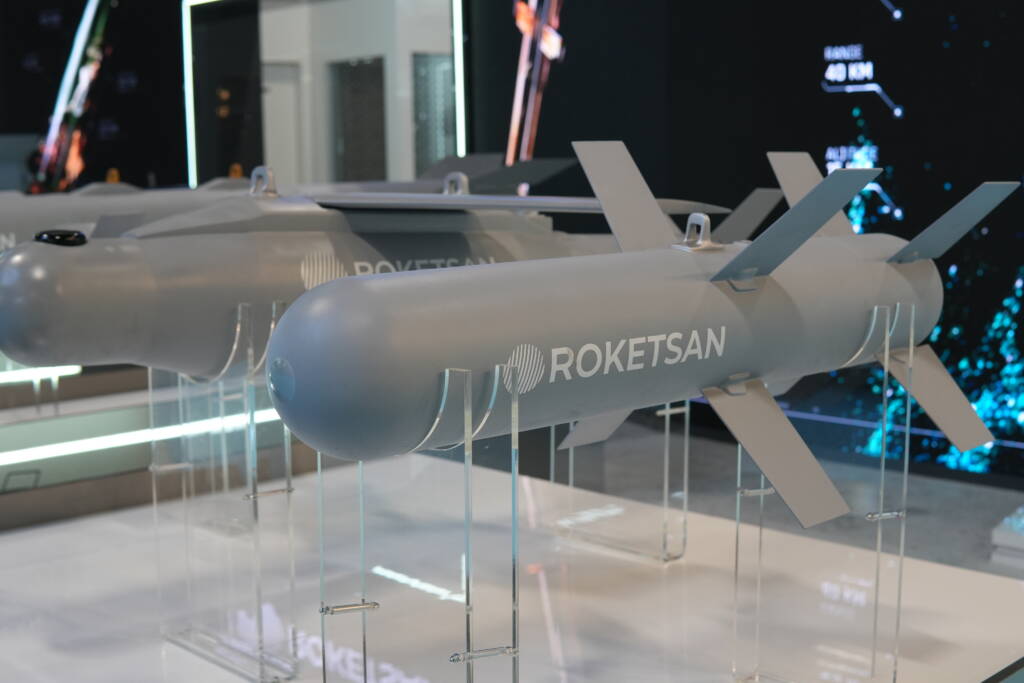
Looking back at several days spent walking through the exhibition halls and outdoor displays, one conclusion stands out above all others.
Eurosatory 2026 was not defined by a single revolutionary vehicle, weapon or technology.
Instead, it showcased the growing integration of artificial intelligence, autonomous systems, drones, heavy land platforms and digital battlefield networks into a single operational ecosystem.
That integration—not any individual product—is likely to define the future of military operations.
Personally, what impressed me most was the pace of technological development.
Compared to previous defence exhibitions I have attended, the emphasis on autonomous systems, counter-drone capabilities and connected battlefield architectures was impossible to overlook.
At the same time, Europe’s defence industry demonstrated remarkable technological maturity.
Companies such as Rheinmetall, KNDS, Leonardo and many others presented highly advanced solutions spanning every operational domain—from underwater robotics and autonomous ground vehicles to mobile air defence, modern infantry fighting vehicles and next-generation soldier systems.
For anyone interested in military technology, defence innovation or the future of modern warfare, Eurosatory remains one of the world’s most important exhibitions.
Rather than simply presenting today’s equipment, the exhibition offers a clear glimpse into tomorrow’s battlefield.
Frequently Asked Questions
What is Eurosatory?
Eurosatory is one of the world’s leading international defence and security exhibitions, held every two years in Paris. It brings together military manufacturers, government organisations, armed forces, industry experts and accredited members of the international trade press.
What were the biggest trends at Eurosatory 2026?
Artificial intelligence, autonomous systems, FPV drones, counter-UAS technologies, mobile air defence, connected battlefield management, modern armoured vehicles and European defence cooperation were among the most significant themes observed throughout the exhibition.
Which companies attracted the most attention?
Major exhibitors included Rheinmetall, KNDS, Leonardo, FN Herstal, Schiebel and many other international manufacturers presenting technologies across land, air, maritime and autonomous domains.
Is Eurosatory only focused on land warfare?
No. Although Eurosatory traditionally focuses on land and air-land defence, the exhibition increasingly includes maritime security, autonomous underwater vehicles, cyber defence, artificial intelligence, electronic warfare, homeland security and multi-domain operational capabilities.